

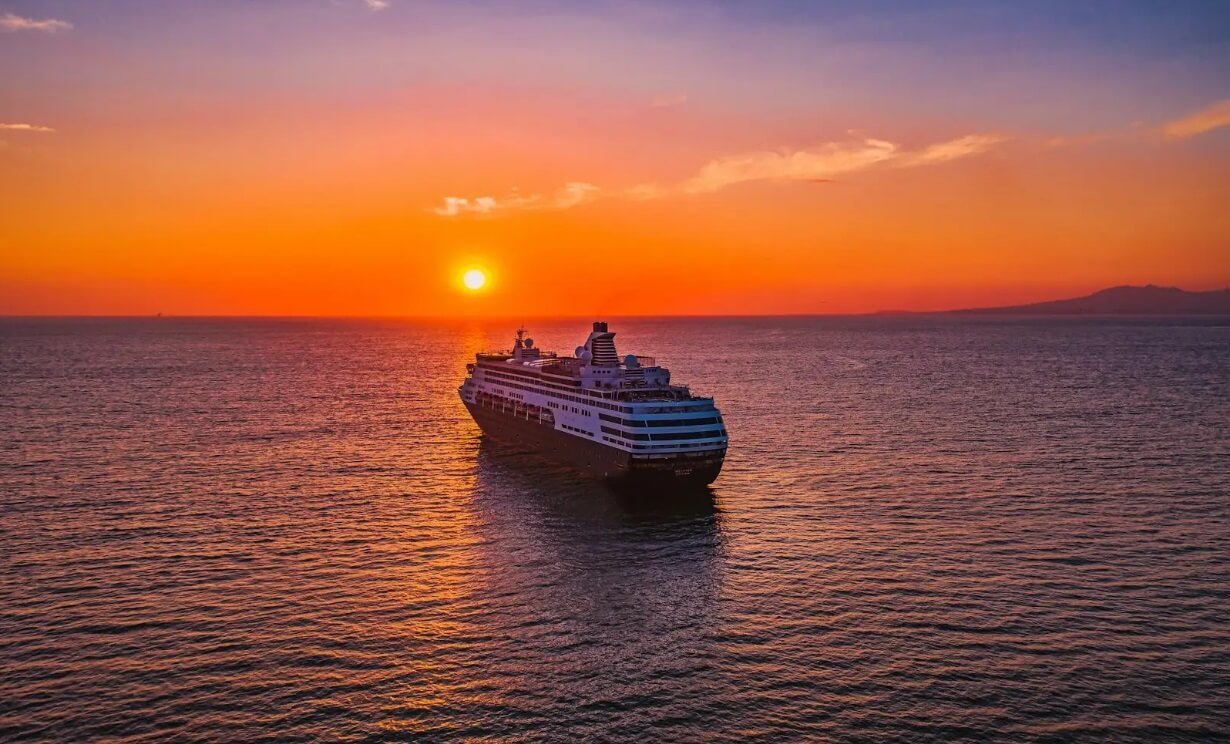
Cozumel’s port welcomed 3,408,684 cruise passengers in the first eight months of 2026 alone (APIQROO, 2026). Plenty of them were on their first ship, and a cruise to Mexico is one of the easiest ways to try cruising. The sailings are short, the ports sit close to home for many travelers, and you get beaches, food and history without planning every step. Pick a route that fits your week, sail when your coast’s weather is kind and budget for what the fare leaves out, and your first cruise to Mexico will feel easy from the moment you board.
Key Takeaways
- Baja sailings from Southern California last three to five nights and make a good trial run for first-timers.
- The Pacific hurricane season starts on May 15, two weeks earlier than the Atlantic season on the Caribbean side.
- Budget for daily service charges, drinks, Wi-Fi and excursions, since most fares leave them out.
- On a closed-loop cruise, US citizens can re-enter with a birth certificate and photo ID, but a passport is safer.
- Use mineral sunscreen in Cozumel, where the reefs form a national park.
Why a cruise to Mexico suits a first-timer?
A first cruise asks you to learn a lot at once: cabins, dining times, port days and the ship’s daily program. A short cruise to Mexico keeps the stakes low. You unpack once, someone else cooks, and you wake up in a new place most mornings.
The ports also make the trip easy to plan. Many of them sit a short walk or a taxi ride from beaches, markets and old town centers, so you can explore on your own without a long transfer. And if cruising turns out to suit you, a longer sailing is an easy next step.
Pick the route that fits your week
Most Mexico cruises follow one of three routes. Choose the home port you can reach with the least travel. Driving to the ship saves a flight and the risk of a delay making you miss the sailing. If you do need to fly, arrive the day before.
1) Baja cruises from Southern California
These leave from Los Angeles or Long Beach, last three to five nights and usually stop in Ensenada. They make a good trial run if you are not sure cruising is for you.
2) The Mexican Riviera
These leave from the West Coast and last about a week. They call at ports such as Cabo San Lucas, Mazatlan and Puerto Vallarta, with more sea days between them.
3) The Western Caribbean
These leave from Florida, Texas or New Orleans and call at Cozumel, Costa Maya or Progreso, often with a stop in another country. Cozumel is the busiest of them. It handled 918 cruise ship calls from January to August 2026 (APIQROO, 2026).
Choose your dates by coast
Winter and spring bring warm, dry weather to both coasts, which is why those months are popular and often cost more. Summer and fall are hurricane season, but Mexico has two seasons, one on each coast.
On the Caribbean side, the Atlantic season runs from June 1 to November 30, peaks on September 10 and sees most of its activity from mid-August to mid-October (National Hurricane Center). On the Pacific side, the eastern Pacific season starts earlier, on May 15, and spreads its storms from late June to early October. So a late-May Mexican Riviera sailing already falls inside the Pacific season.
Cruise lines change routes to avoid storms, so a sailing in those months can still be a good trip. Expect some risk of a changed port or an extra sea day, and read the cancellation terms before you pay.
Book smart and read what the fare includes
Fares go up and down, and the same cabin can cost different amounts from one week to the next. Watch a few Mexico cruise deals for a while before you commit, and read what each fare includes.
For your first cruise, pay attention to the cabin. An inside cabin is the cheapest option and works fine if you only sleep there. A balcony costs more but gives you fresh air and a private view. If you worry about seasickness, pick a cabin on a lower deck near the middle of the ship, where you feel the least movement.
Budget for the extras
Your fare covers your cabin, main meals and much of the entertainment. Plan to pay separately for drinks beyond the basics, Wi-Fi, shore excursions and specialty restaurants.
Many lines also add a daily service charge to your onboard account. One major line’s own FAQ lists $20 per person per day for standard cabins and $25 for suites. For two people on a seven-night sailing in a standard cabin, that is 2 x 7 x $20 = $280 before a single drink. The same line allows a fuel supplement of up to $10 per passenger per day outside the fare, and it charges $15 to open a bottle of wine you bring aboard.
Your cabin card works as your room key and your wallet, so every drink and purchase lands on one bill. Check the balance in the app each evening, and the final bill stays close to your plan.
Make the most of port days
Port days are the highlight of a Mexico cruise. In Cozumel you can snorkel over coral reefs. In Cabo San Lucas you can take a boat out to the rock arch at Land’s End. Puerto Vallarta has a long seaside promenade you can walk on your own.
You can book a tour through the cruise line or plan your own day. A ship’s tour costs more, but the ship waits if the tour runs late. If you explore on your own, watch the clock. The ship will not wait, and the all-aboard time runs on ship time, which can differ from local time. Some ports use small tender boats to carry passengers ashore, so allow extra time for the queue on the way back.
Carry some small bills. Many shops near the port accept US dollars, but you often get a better price paying in pesos.
Eat and swim safely ashore
Street food and seafood are part of the fun, so choose them with care. The CDC advises travelers to avoid raw seafood, including dishes “cooked” in citrus juice such as ceviche, and to choose fruit they can peel themselves (CDC, 2026).
Cozumel’s reefs sit inside a national park, so what you put on your skin matters. NOAA says mineral sunscreen, which does not use chemical UV filters, is the better option for aquatic life, and a sun shirt is better still (NOAA, 2026). Pack it from home, because port shops may not stock it.
Pack for sun, sea and cool nights
Bring your prescriptions and over-the-counter medicines, with extra in case of delays, plus sunscreen of SPF 15 or higher and a hand sanitizer (CDC, 2026). Add insect repellent for port days, a refillable water bottle, a small day bag and a light layer. Pacific sailings in winter and spring can turn cool on deck at night, and dining rooms run cold with air conditioning.
Three steps before you book
Choose your route, check your coast’s storm season and total the extras on top of the fare. Do those three things, and your first cruise to Mexico will likely not be your last.
FAQs about a cruise to Mexico
Do I need a passport for a cruise to Mexico?
Not always. US Customs and Border Protection says US citizens on a closed-loop cruise can re-enter with a birth certificate and a government photo ID, but the countries you visit may still ask for a passport.
Can you drink the tap water in Mexico’s cruise ports?
The CDC advises against drinking tap water where it might be contaminated. It also warns against ice and fountain drinks there, because both likely come from the tap.
Can you bring your own wine on a cruise?
Some lines allow it for a fee. One major line charges $15 corkage for each 750 ml bottle you bring aboard, so check your line’s policy before you pack a bottle.
How busy is the Cozumel cruise port?
Quintana Roo’s port authority counted 918 cruise ship calls and 3,408,684 cruise passengers in Cozumel from January to August 2026. Spread over those 243 days, that averages about 14,000 passengers a day.
Is Cozumel’s reef protected?
Yes. Mexico declared the Arrecifes de Cozumel a national park on July 19, 1996, and almost all of its 11,987.88 hectares lie under the sea.
Which sunscreen ingredients can harm coral?
NOAA names oxybenzone, octinoxate and octocrylene among the sunscreen chemicals that can harm marine life. It also lists nano forms of titanium dioxide and zinc oxide.
How do you avoid getting sick on a cruise ship?
The CDC says norovirus causes most outbreaks of vomiting and diarrhea on ships. Wash your hands with soap and water before eating and after touching shared surfaces such as stair railings.
Are there health notices for travelers to Mexico?
Yes. The CDC has reported more cases of cyclosporiasis in travelers returning from Mexico, including Cancun and the Riviera Maya, and it urges safe eating and drinking habits.
Can a hurricane hit outside hurricane season?
Yes. NOAA says hurricane season runs from June 1 to November 30, but these storms can form before and after the official season.


